Commercial module platform
OrbPro2 Module Platform
OrbPro2 lets teams ship proprietary astrodynamics, sensor, and mission-analysis capabilities as SDK-compliant modules. The SDK owns the generic ABI, manifest, host, compliance, and loading contract; OrbPro2 owns the space-operations patterns that make those modules useful inside real applications.
Build modules once, deploy them where operators work
Start with the module type closest to your algorithm, copy its manifest pattern, define SDS-backed ports, implement the compiled module surface, then validate against authoritative numerical cases. The same module can support Sandcastle demos, internal tools, desktop deployments, and customer-facing workflows without embedding domain physics directly in the UI.
- Use SDS schemas for input and output records.
- Publish `dist/isomorphic/module.wasm` as the canonical artifact.
- Verify browser and WasmEdge loading with the SDK harness.
- Use authoritative physics, standards, or upstream validation data.
Commercial module types
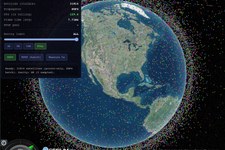 Propagators
Advance satellite state with SGP4, HPOP, cislunar, or custom
dynamics.
Propagators
Advance satellite state with SGP4, HPOP, cislunar, or custom
dynamics.
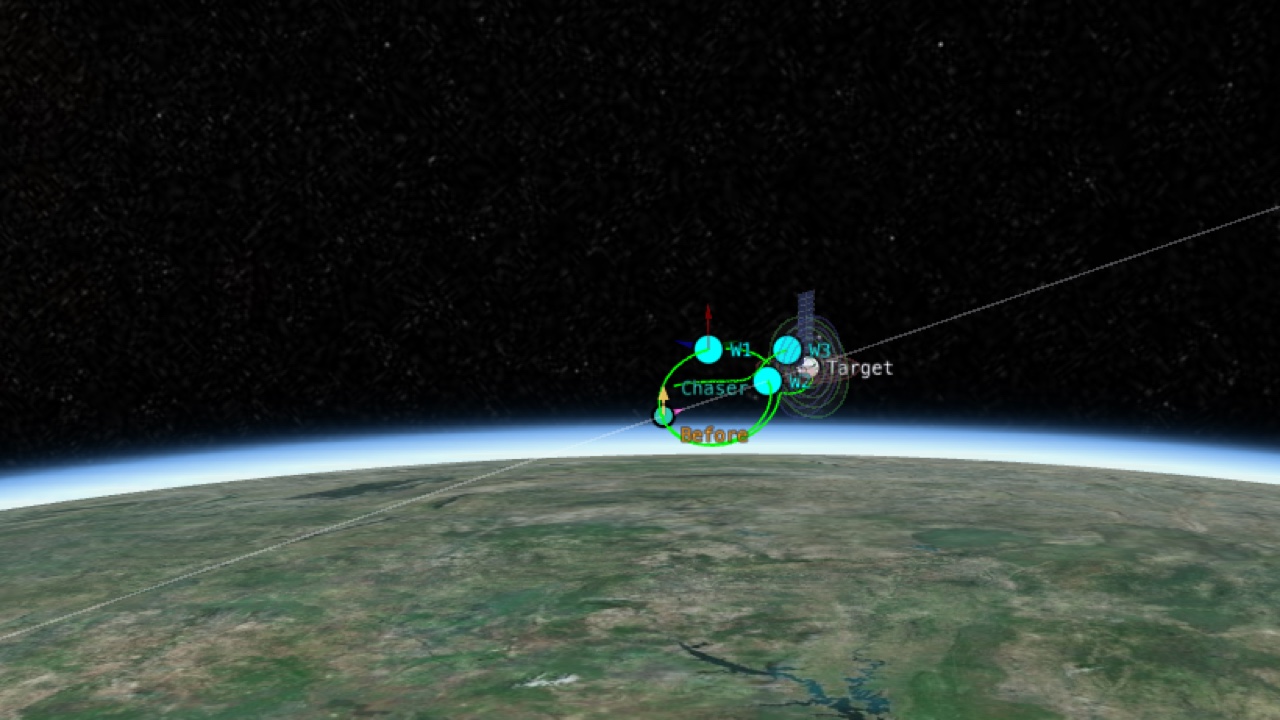 Maneuver planners
Plan RPO waypoints, transfers, targeting arcs, and delta-v
sequences.
Maneuver planners
Plan RPO waypoints, transfers, targeting arcs, and delta-v
sequences.
 Atmosphere and force models
Provide density, drag, SRP, gravity, and perturbation terms to
higher-order propagators.
Atmosphere and force models
Provide density, drag, SRP, gravity, and perturbation terms to
higher-order propagators.
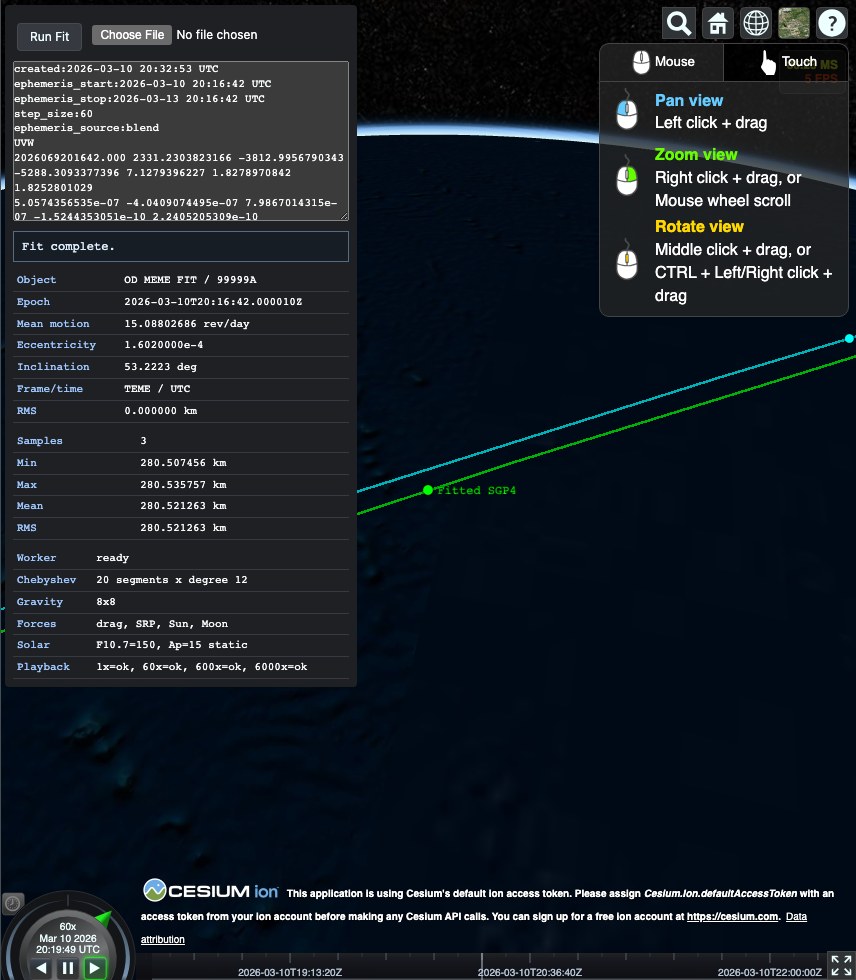 Orbit determination
Fit trajectories from measurements, covariances, and dynamic
models.
Orbit determination
Fit trajectories from measurements, covariances, and dynamic
models.
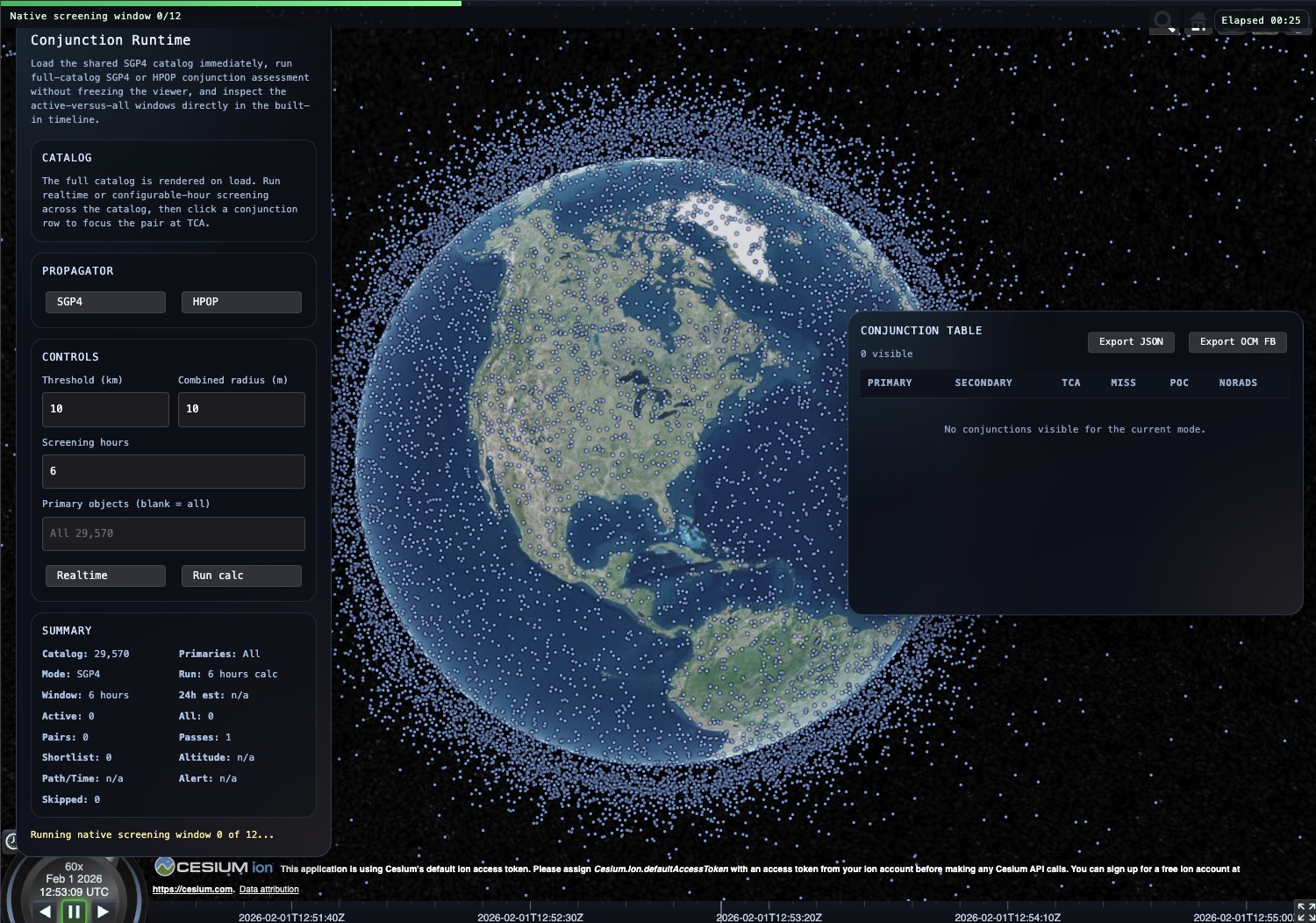 Conjunction analysis
Screen close approaches and compute event geometry, covariance,
and probability products.
Conjunction analysis
Screen close approaches and compute event geometry, covariance,
and probability products.
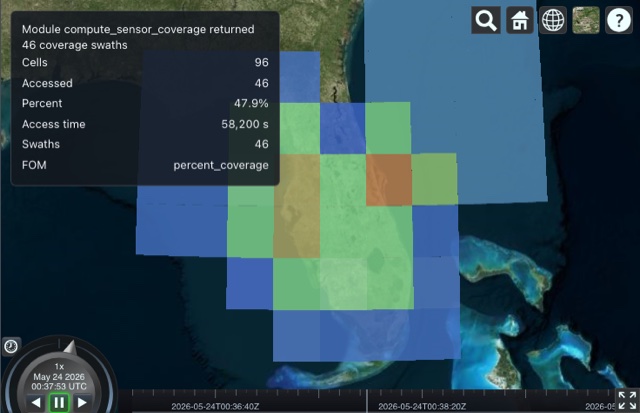 Access and coverage
Evaluate OrbPro Sensor coverage, swath, revisit, link windows,
and fastest-path opportunities.
Access and coverage
Evaluate OrbPro Sensor coverage, swath, revisit, link windows,
and fastest-path opportunities.
 Sensor and shader modules
Run RF, EO/IR, viewshed, and GPU-assisted sensor analysis in the
OrbPro2 viewer.
Sensor and shader modules
Run RF, EO/IR, viewshed, and GPU-assisted sensor analysis in the
OrbPro2 viewer.
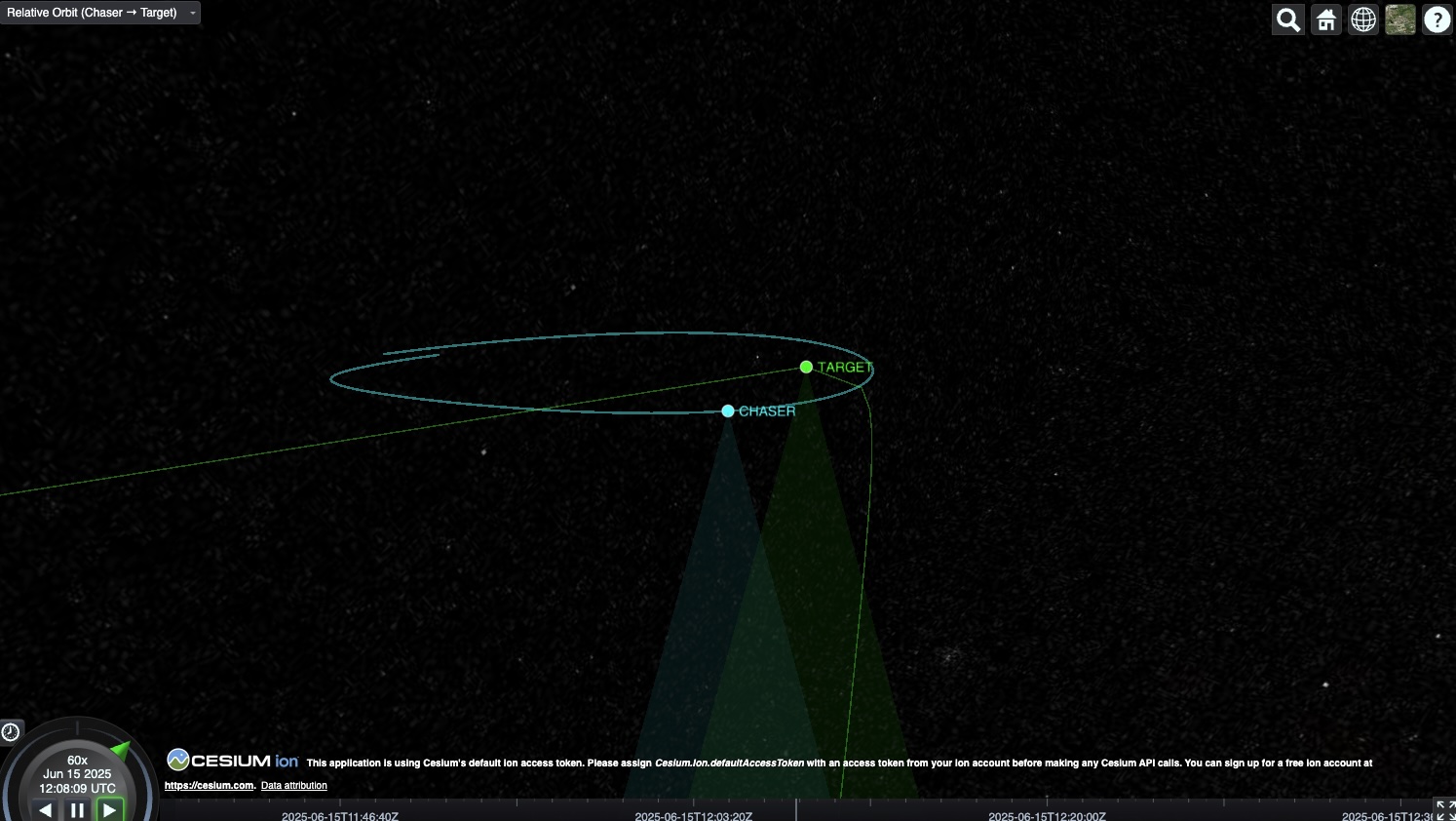 Basilisk-backed simulation
Package Basilisk-derived dynamics, messages, and simulation loops
as SDK-compliant modules.
Basilisk-backed simulation
Package Basilisk-derived dynamics, messages, and simulation loops
as SDK-compliant modules.
LLM and agent guidance
Agent instructions are intentionally separate from this human guide.
Point an LLM at
modules/AGENTS.md
plus the specific layer file for the module type you want it to
author. That keeps generated modules aligned with the SDK contract
while preserving domain-specific OrbPro2 conventions.